
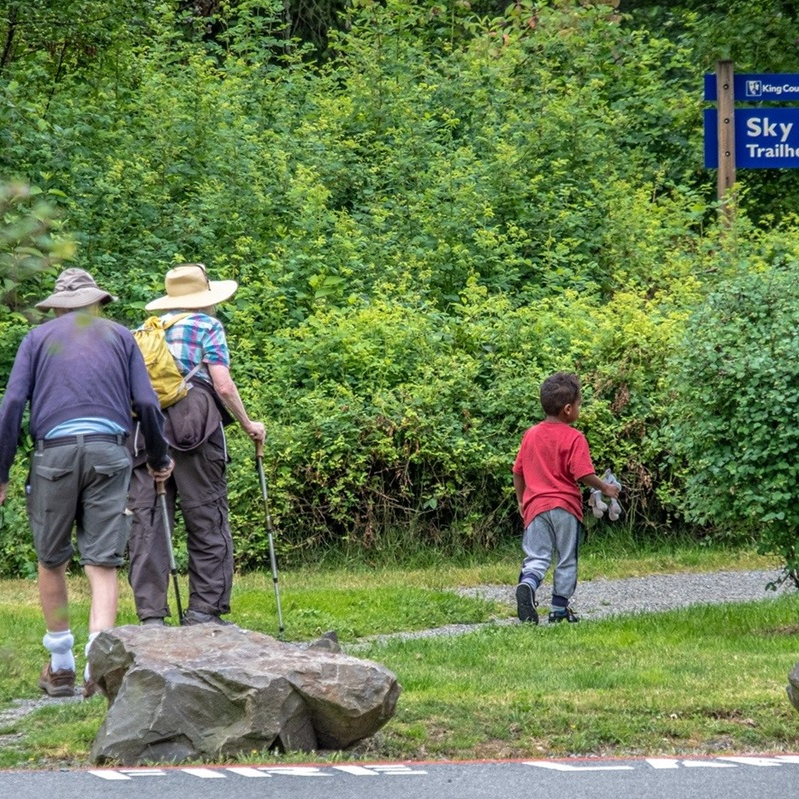
King County Parks wants to hear from people with disabilities about their park and trail access needs.
Since its inception in 1938, Parks strives to serve people of all abilities. King County Parks is creating an Americans with Disabilities Act (ADA) Transition Plan to do just that, improve accessibility and remove barriers to the parks near you!
Why is it called a transition plan? This plan will not only identify barriers to access, it will also propose a schedule to removing them. Access is important and it’s not something that changes overnight. But knowing more about the needs of our diverse visitors will help us create a good plan.
How can you help? We invite you to complete our survey by March 29, 2024. Your input about your experiences visiting King County Parks and your ideas for how we can improve accessibility in King County Parks are highly valued.

Why is King County Parks creating an ADA Transition Plan?
As required by Title II guidelines for state and local governments, the King County Parks (Parks) ADA Transition Plan is a guide to removing barriers and improving access for everyone. The Parks ADA Transition Plan will include:
- A list of the physical barriers that limit the accessibility of activities and structural facilities.
- Methods to remove the barriers and identify new amenities that foster an accessible, welcoming, and safe experience.
- Identify next steps (timeline, funding plan) to address barriers.
This plan is the first step to address accessibility concerns and ensuring that our facilities are inclusive for everyone.
Through the ADA Transition planning process, Parks will continue to work to understand and identify the existing barriers to accessibility and prioritize how to address/fix those barriers.
Making changes may mean changing Parks’ practices, like how it trains employees or how we communicate to the community what’s happening in parks. In other cases, improvements may require new or additional funding to make improvements at existing parks or facilities. Additional funding needs will be addressed at a later phase of the planning process.

How to get involved
We want to hear from people with disabilities and people who are family, friends, and caregivers for people with disabilities on crucial topics like:
- What’s working well at accessible parks and trails in the King County Parks system
- Any physical barriers that limit the accessibility of parks-related activities
- Suggestions for potential methods to remove the barriers and make existing facilities accessible and optimal for use.
We are also organizing listening sessions with people with disabilities and other overburdened communities, such as older adults, people who identify as Black, Indigenous or People of Color (BIPOC), people living with lower incomes, people who are immigrants or refugees, and people who speak a language other than English at home.
If you’re interested in participating in these listening sessions email parksinfo@kingcounty.gov
Your input will help us understand the priorities and recommendations people have for the ADA Transition Plan and help ensure King County Parks makes it easier for people with disabilities to access and enjoy the 205 parks, 175 miles of trails, 32,000 acres of open space, 250 miles of backcountry trails, 150,000 acres of conservation easements managed by the county.
Please take a few minutes to fill out the survey
If you have any questions, concerns, or issues accessing the survey, please email parksinfo@kingcounty.gov
