
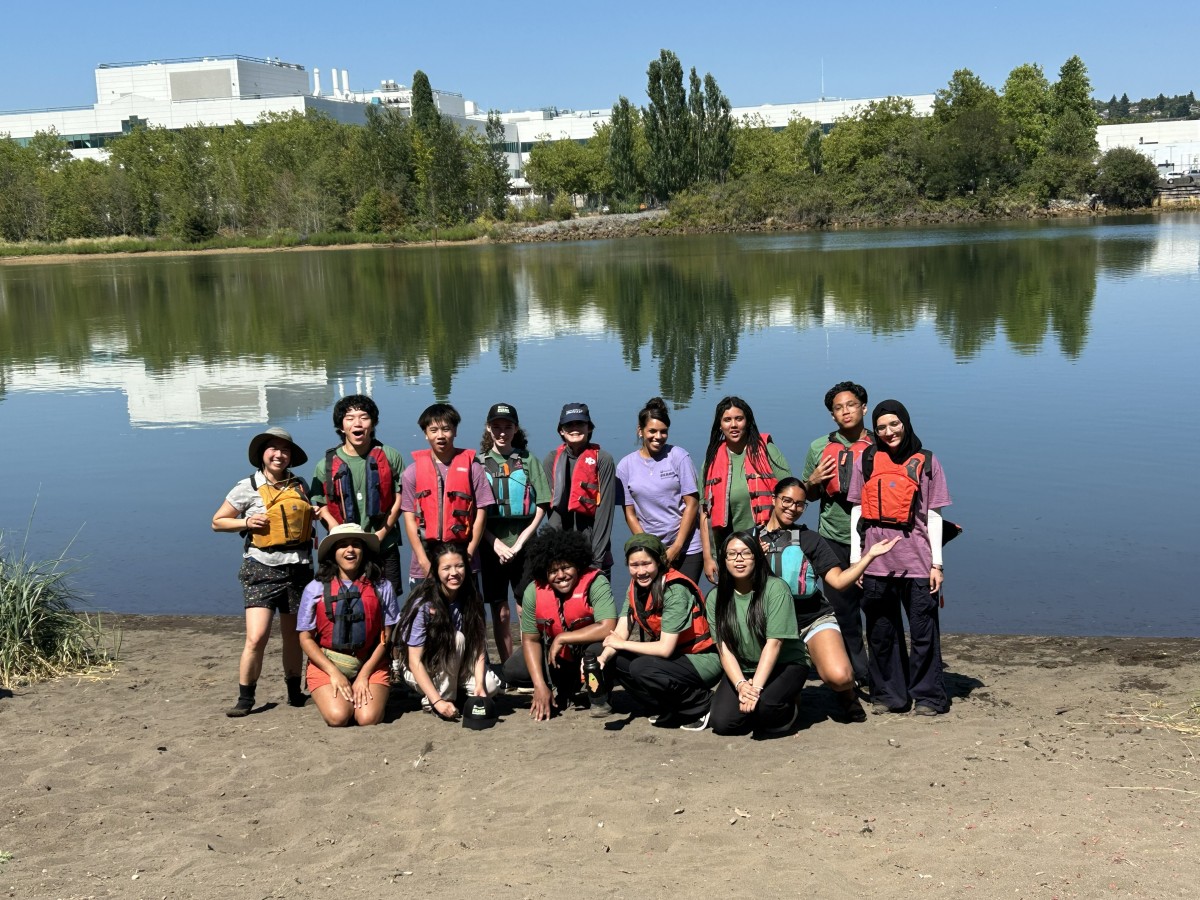
Last summer from July 8 – August 14, 23 high schoolers participated in the King County Parks Youth Conservation Corps (YCC) internship program. YCC is split into two cohorts—Skyway and White Center. My name is Emelia and I was a part of the summer 2025’s Skyway cohort along with a few other high schoolers from around the area.
When I signed up for the Youth Conservation Corps Internship in early April, I wasn’t sure what to expect. For years I helped removing the invasive black berries encroaching on the garden at my old school but other than that I had little experience with restoration. Through YCC I learned what I can do to help revive natural lands, and how to better keep them safe, as well as the impact that every action has on people and land.


In the first week of the internship, we mainly stayed in Skyway with our cohort to get familiar with the space and people that we would be interacting with for the next 6 weeks. As we had not seen each other since the orientation a few weeks back this allowed us to learn people’s names and make friends. I think that this led to the cohorts being able to go through the internship with more enthusiasm and get things done quickly but with a sense of pride and joy as we worked with our peers.
We participated in a variety of activities over the summer that allowed us to reflect on our relationship with nature and learn about the history of the land that we were restoring. Some of the more notable activities included visiting the yəhaw̓ Indigenous Creatives Collective, Ayeko Farm, the Water Shed, and the Wastewater Treatment Facility.
The Skyway cohort visited the yəhaw̓ Indigenous Creatives Collective during the third week of the internship. Staff welcomed us when we arrived and led us in both restoration of the land and a natural dye activity. Prior to our visit, we had spent our restoration days cutting back invasive blackberries at Skyway Park. At yəhaw̓, we got to work with invasive ivy instead. This allowed us to learn a new way to restore lands as well as how something that seems so small can cause great damage to surrounding plants if it goes unchecked. Some of the interns practiced removing the ivy off the ground and tree trunks with varied hand tools while others decided to pull it out by hand or practiced removing overgrown tree branches with loppers. These skills helped us become more confident as we moved to restoration at Dick Thurnau Memorial Park later in the program, with most of it being covered in ivy. While we removed ivy, we were also able to talk with other members in the cohort, allowing us to build connections through our restoration work.


Back at yəhaw̓, we worked on natural dye processes. Some of us decided to use indigo, while others use marigolds. This separated the groups that we had begun to fall into as we became comfortable with certain people, allowing us to make new connections. We were all learning the process as we went so when one person figured out a way to make a better or interesting result with the dye, we were able to help or teach our peers about it. Like the restoration work, the activity helped us build relationships, but it also showed us how beautiful the colors from natural plants could be. We were told of the benefits of natural dye including that it is better for the environment than polyester and synthetic dye, and while we were warned that the natural dye would fade faster than synthetic dyes I believe that there is a joy in being able to see your creation change from when you first add it to the dye pot to when the colors fade. On the drive back to Skyway after we left yəhaw̓ there was conversation of people wishing to do the natural dye activity again, with some saying that the workshop inspired them to look into getting their own gardens at home


Ayeko Farm was a favorite for many of the interns in both the Skyway and White Center cohorts. At Ayeko, the interns were all able to begin by getting an introduction to the farm and the things that were grown there. We were then given the opportunity to make our own lunch, picking berries, cooking collard greens, and making a berry crumble. This was not only a way for us to be more connected with the process of where our food comes from, a thing that is often overlooked in the current day, but we were also able to connect with the people in our cohort. While cooking all the interns were able to make new connections and strengthen bonds already made over the summer.
The joy brought from our trip to Ayeko Farm is something that all the interns continued to discuss throughout the rest of the internship, showing how influential places such as Ayeko can be in a community.


I am incredibly grateful to have been able to participate in this program and to have met all of the people that I did while I was there. I found many new communities through the YCC internship, expanding my knowledge of my community and showing me new places in the community where I am welcomed. The focus on BIPOC and women organizations throughout the summer have shown me so many options for what I can do in my future and made me feel seen in the conservation and environmental sector.
Applications are open until April 27, 2026, for King County teens entering Grades 10-12. Apply on the YCC website.