
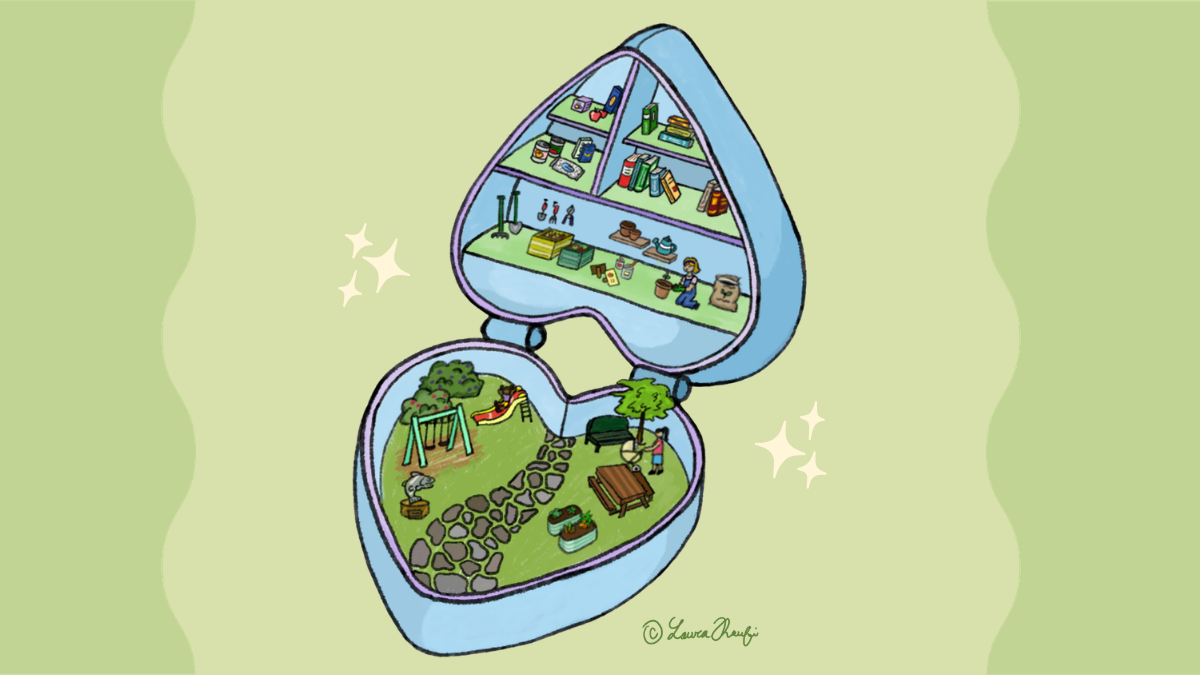
You may have come across a small parcel of green space in your neighborhood, carved from an old parking lot or leftover fraction of a commercial or residential lot. If so, congratulations! You have a pocket park in your community: a mini outdoor space measuring only a quarter acre or less in size.
These bite-sized spaces are often intentionally designed to provide “pockets” of rest and recreation to residents of densely populated urban environments, who may otherwise have limited access to the benefits of parks and other forms of green space.
If you care about local activism, cultivating third spaces, or the role of small green spaces in enhancing urban sustainability, read on; you might be surprised by the rich history and community-oriented wholesomeness responsible for the modern pocket park.
From the ashes, a tiny park
The concept of the pocket park originated in post-war Europe. After World War II destroyed cities across the continent, many urban planners took part in a massive reconstruction effort throughout the 1950s. Some carved out small green spaces while reconstructing neighborhood ruins — places for rest and joy to replace rubble and bad memories. From the ashes of war-torn Europe, the first pocket parks were born.
Professor and landscape architect Karl Linn, who had fled the Nazis in Germany decades earlier, was inspired by this European effort and is largely credited with bringing this concept to the United States in the 1960s. He persuaded civic leaders in Baltimore, Philadelphia, and Washington DC to reclaim vacant lots as “neighborhood commons.”
City politicians took up Linn’s strategy as low-cost, high-impact investments in urban renewal. At some point, people started calling them “vest-pocket parks”, likely until vests went out of fashion and they became just “pocket parks” (my theory).
The pocket park strategy spread to metropolises across North America throughout the 60s and 70s, frequently as a result of community groups advocating for more public recreation areas to replace empty lots and other urban eyesores. Today, many pocket parks are still bought and maintained by cities or neighborhood groups as a result of local activism.
What makes it a pocket park?
Apart from size, each pocket park usually only has one or two distinct purposes to serve the needs of the immediate surrounding community. Some spaces might include:
- A small event space for community gatherings
- Play areas for children
- Seating areas to relax or meet with friends and neighbors
- Tables for picnics or lunch breaks
Although functions vary from park to park, the National Recreation and Park Association states pocket parks should be accessible on foot, less than a 10-minute walk away from park users, and serve a population of about 500-1000 residents.
Pocket parks in King County
Pocket parks are mostly discussed as an urban phenomenon, but what if you don’t live in a big city like Seattle? That’s where county parks agencies like King County’s step in, providing access to the benefits of pocket parks for residents of unincorporated county land. A broader definition of pocket parks lies beyond the urban realm, in dense suburbs where people live, work, and play.
King County Parks has two locations that meet the criteria for a pocket park: Black Panther Park in Skyway, and Quigley Park in Fall City. Both offer very different benefits to two very different communities, providing an interesting case study on the fluidity of pocket parks and how they can be tailored to a neighborhood’s unique needs!
Black Panther Park


Black Panther Park opened earlier this year in April 2026 in partnership with Nurturing Roots Farm and Stone Soup Gardens, right across the street from Skyway Park. Skyway, just south of Seattle in an unincorporated urban area of King County, is a historically black community with a legacy of community organizing and collective action.
Nurturing Roots Farm, an urban farm and food justice-centered community program located in Seattle’s Beacon Hill neighborhood, describes the park as a “vibrant, community-centered space” commemorating South Seattle’s historic Black Panther party chapter.
Black Panther Park is the product of an eight-year community organizing effort, involving hundreds of dedicated volunteers and staff members. Even the smallest park project can take years to complete, especially when it’s a grassroots effort to get the ball rolling in the first place. But to the Skyway community, it was worth every dollar and every volunteer work party.
One thing that makes Black Panther Park unique is its emphasis on art that honors history. Various local artists painted nine murals, each representing a different style and interpretation of the Black Panther movement, from kids benefitting from their free breakfast program to the fight for economic and social justice. Together with the park’s circular layout, 2D metal panther, and painted fist, it shows how a pocket park can double as an art piece and monument alongside its traditional purpose as a gathering space.
This ADA-accessible pocket park also includes herb garden beds, bench seating, a food pantry, and a little library. All this on only a quarter-acre of land! That’s the magic of pocket parks when they are created out of community love and intentionality.
Quigley Park


Quigley Park, also known as Olive Taylor Quigley Park, in Fall City is a similarly sized park with very different characteristics. Fall City is more rural, with a small historic downtown area bordering the Snoqualmie River. Between the edge of downtown and the riverbank lies this unique roadside pocket park with a surprising history.
Once a roadside ditch and unofficial dumping ground, it seemed an unlikely candidate for a park. That is, until the 1940s, when a foreman working for the Washington State Highway Department filled it with excess dirt from his construction projects, leveling the mound with the road above.
Over the next ten years, the foreman and a few other State department truckers worked on improving the lot, adding picnic tables, grass, and trees. By 1960, the workers had fashioned it into a respectable roadside attraction used by travelers and community members alike.
The tiny roadside park was named in 1961 for Olive Taylor Quigley, the daughter of the first Anglo-American settlers in Fall City who was still kicking at age 85! Having dedicated her long life to friendship, community service, and involvement with local clubs after the death of her husband, she was much-loved by her neighbors.
Quigley died in 1974 at 98 years young, but her legacy was kept alive by community members who stewarded the park in her honor until King County Parks took it on in 1989.
Large nature parks in rural areas are beautiful and valuable, but they are rarely within walking distance of surrounding residential areas. Innovative parks like Quigley and Black Panther Park demonstrate different ways a pocket park can benefit populated suburban and rural communities where they are not traditionally found.
The brand-new Black Panther Park and 70+ year-old Quigley Park are as different as two pocket parks can be, yet they share a unique spark – a sense of pride and ownership, publicly-funded but enlivened by community care.
One of the most fascinating things about pocket parks is how each one has a story of intentionality behind them. These stories are often about community organizing, fundraising, and action that come together to build a park tailor-made to the needs and character of the neighborhood.